Best IB Schools in Tokyo 2026: The Complete Guide for Expat and Local Families

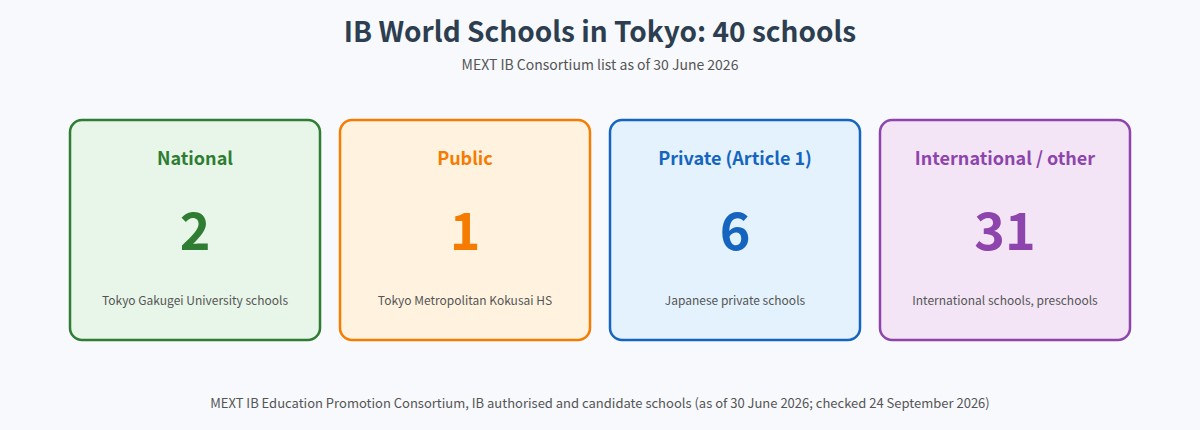
Tokyo is the undisputed hub of International Baccalaureate education in Japan. With more IB-authorized schools than any other city in the country, the capital offers families an extraordinary range of options, from world-class international schools delivering the full IB Continuum to pioneering Japanese government-recognized schools (ichijoko) teaching the Diploma Programme in both English and Japanese. Whether you are an expat family relocating to Tokyo or a Japanese family seeking a globally oriented education for your child, this guide covers everything you need to know about the best IB schools in Tokyo for 2026.

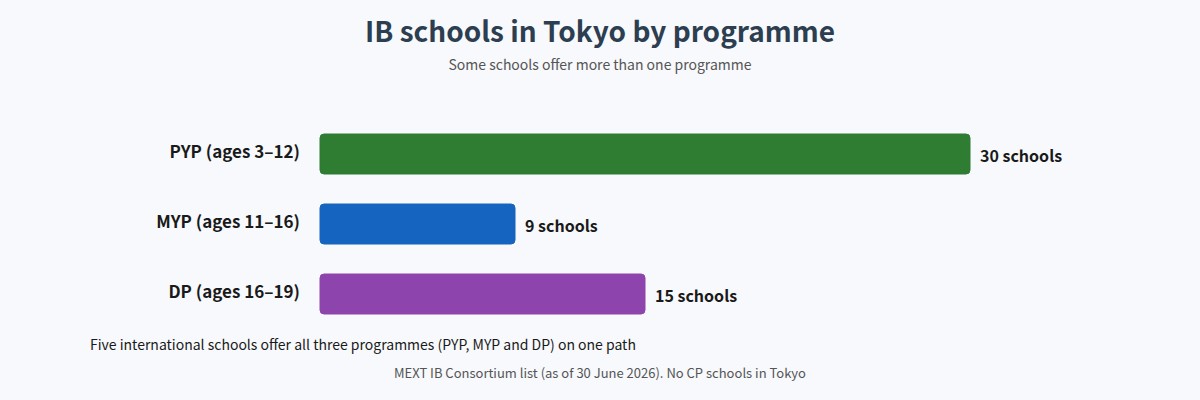
As of early 2026, Tokyo hosts over a dozen IB-authorized institutions spanning the Primary Years Programme (PYP), Middle Years Programme (MYP), and Diploma Programme (DP). The city also has several candidate schools working toward full authorization. This article provides detailed profiles of the top schools, a side-by-side comparison table, practical application advice, and answers to frequently asked questions.

  1. Why Tokyo Is Japan’s IB Capital
  2. International Schools with Full IB Programs
    1. Aoba-Japan International School (A-JIS)
    2. K. International School Tokyo (KIST)
    3. Seisen International School
    4. Tokyo International School (TIS)
    5. St. Mary’s International School
  3. Japanese Government-Recognized IB Schools (Ichijoko)
    1. Tokyo Metropolitan Kokusai High School
    2. Kaichi Nihonbashi Gakuen Junior and Senior High School
    3. Tamagawa Gakuen (Tamagawa Academy)
    4. Chiyoda High School of Commerce (Chiyoda International School Tokyo)
  4. IB Preschools and Kindergartens
    1. Aoba-Japan Bilingual Preschool (A-JB)
    2. Machida Kobato Kindergarten
  5. Comprehensive Comparison Table: Tokyo IB Schools at a Glance
  6. How to Choose the Right IB School in Tokyo
    1. Full IB Continuum vs. Partial Programs
    2. Language of Instruction
    3. Budget and Affordability
    4. Location and Commute
    5. University Placement Goals
    6. School Culture and Values
  7. Application Tips for Expat Families
    1. Start Early
    2. Attend School Events
    3. Prepare Required Documents
    4. Understand the Assessment Process
    5. Consider Corporate Relocation Support
    6. Plan for the Transition
  8. Frequently Asked Questions
    1. What is the IB, and why does it matter?
    2. Can Japanese nationals attend international IB schools in Tokyo?
    3. How does the IB Diploma compare to Japanese university entrance exams?
    4. What is the average IB Diploma score at Tokyo schools?
    5. Is it possible to switch from a non-IB school to an IB school mid-way?
    6. Do IB schools in Tokyo offer scholarships or financial aid?
    7. What support is available for students who are not fluent in English?
  9. Summary: Tokyo’s IB Landscape in 2026

Why Tokyo Is Japan’s IB Capital

Tokyo’s status as Japan’s IB capital stems from several converging factors. The city is home to the largest expatriate community in the country, with over 550,000 foreign residents as of 2025. Major multinational corporations, embassies, international organizations, and globally minded Japanese families all drive demand for rigorous international education.

The Japanese government’s push to expand IB education, a policy initiative launched in the early 2010s with a target of 200 IB schools nationwide, has also accelerated growth in the capital. Tokyo Metropolitan Government has been especially proactive, establishing the country’s first public IB school and encouraging private institutions to pursue authorization.

The result is a diverse ecosystem of IB schools that caters to every need: full-English international schools for expat families, dual-language Japanese-English programs for local families, and PYP-authorized preschools that give young learners an early start in inquiry-based education.

International Schools with Full IB Programs

These are the premier international schools in Tokyo offering one or more IB programs. They primarily serve the expatriate community and conduct instruction in English, though many also enroll Japanese nationals seeking a global education.

Aoba-Japan International School (A-JIS)

Programs: PYP, MYP, DP (Full IB Continuum)
Location: Hikarigaoka Campus (Nerima-ku), Meguro Campus, Hon-Komagome Campus (Bunkyo-ku)
Grades: Pre-K (age 1.5) through Grade 12
Annual Tuition: Approximately 2,000,000 to 2,600,000 JPY
Language of Instruction: English

Aoba-Japan International School is one of the few schools in Tokyo, and in all of Japan, to offer the complete IB Continuum from PYP through MYP to DP. Founded in 1976, A-JIS operates three campuses across Tokyo. The main Hikarigaoka Campus in Nerima-ku houses the elementary and middle school programs, while upper secondary students attend the Hon-Komagome Campus in Bunkyo-ku for their DP studies.

A-JIS is accredited by the Council of International Schools (CIS) and the New England Association of Schools and Colleges (NEASC), in addition to its IB authorization. The school draws students from over 30 nationalities, creating a genuinely multicultural environment. Its DP results have been consistently competitive, with graduates gaining admission to universities in the UK, US, Canada, Australia, and Japan.

Notable features:

  • One of only a handful of full IB Continuum schools in Japan
  • Strong STEAM and arts programs integrated across all IB stages
  • Bilingual preschool feeder program (see Aoba-Japan Bilingual Preschool below)
  • Active community service and CAS (Creativity, Activity, Service) program
  • School bus service across Tokyo

K. International School Tokyo (KIST)

Programs: PYP, MYP, DP (Full IB Continuum)
Location: Koto-ku (Shinonome area, near Toyosu)
Grades: Kindergarten through Grade 12
Annual Tuition: Approximately 2,200,000 to 2,500,000 JPY
Language of Instruction: English (with Japanese language classes)

K. International School Tokyo is another full IB Continuum school and one of the most respected international schools in Tokyo. Located in the rapidly developing Koto-ku waterfront area, KIST has built an outstanding reputation for academic rigor and strong DP results. The school was among the first in Japan to receive authorization for all three IB programs.

KIST maintains a relatively small student body compared to some larger international schools, which allows for personalized attention and a tight-knit community feel. The school’s DP pass rate consistently exceeds the global average, and graduates regularly gain admission to top-tier universities worldwide, including Oxbridge, Ivy League institutions, and leading Japanese universities such as the University of Tokyo and Keio University.

Notable features:

  • Consistently high DP scores, often above the world average
  • Small class sizes (typically 15-20 students) for personalized learning
  • Strong Japanese language program for non-native speakers
  • Modern waterfront campus with excellent science and technology facilities
  • Robust university counseling from Grade 9 onward

Seisen International School

Programs: PYP (Kindergarten through Grade 5)
Location: Setagaya-ku (Yoga area)
Grades: Kindergarten through Grade 12 (PYP for K-5; non-IB curriculum for Grades 6-12)
Annual Tuition: Approximately 2,000,000 to 2,400,000 JPY
Language of Instruction: English

Seisen International School is a Catholic girls’ school established in 1962 by the Handmaids of the Sacred Heart of Jesus. While the school offers education from kindergarten through Grade 12, its IB authorization covers the Primary Years Programme for students in Kindergarten through Grade 5. The upper school follows its own college-preparatory curriculum rather than the MYP or DP.

Seisen’s PYP program is highly regarded for its inquiry-based approach to learning, combined with the school’s strong values-based education rooted in Catholic tradition. The school’s beautiful, spacious campus in the quiet residential area of Yoga in Setagaya-ku provides an excellent learning environment. Despite being a girls’ school, Seisen admits boys in kindergarten, making it an option for younger male students as well.

Notable features:

  • Established PYP program with decades of experience in inquiry-based learning
  • Beautiful, green campus in a quiet Setagaya residential neighborhood
  • Strong emphasis on character development and community service
  • Co-educational kindergarten (girls only from Grade 1)
  • Well-established alumni network and university placement support

Tokyo International School (TIS)

Programs: PYP, MYP
Location: Minato-ku (Mita area, near Tokyo Tower)
Grades: Kindergarten through Grade 9
Annual Tuition: Approximately 2,300,000 to 2,700,000 JPY
Language of Instruction: English

Tokyo International School is located in the heart of Minato-ku, one of Tokyo’s most international neighborhoods. The school offers the PYP and MYP, covering students from kindergarten through Grade 9. TIS does not currently offer the Diploma Programme, so families seeking a full K-12 IB pathway will need to plan a transition to another school for the senior years.

What sets TIS apart is its central location and its strong inquiry-driven, student-centered approach. The school is known for its vibrant, creative culture and its emphasis on developing the whole child. Its Minato-ku location is convenient for families living in central Tokyo, particularly those in the embassy and business districts.

Notable features:

  • Prime central Tokyo location in Minato-ku
  • Strong PYP and MYP programs with excellent inquiry-based pedagogy
  • Diverse international student body from numerous countries
  • Emphasis on arts, music, and creative expression alongside academics
  • Close proximity to major embassies and corporate offices

St. Mary’s International School

Programs: DP Candidate School
Location: Setagaya-ku (near Futako-Tamagawa)
Grades: Kindergarten through Grade 12 (boys only)
Annual Tuition: Approximately 2,200,000 to 2,600,000 JPY
Language of Instruction: English

St. Mary’s International School is one of the oldest and most prestigious international schools in Tokyo, founded in 1954 by the Brothers of Christian Instruction. As a boys-only school from kindergarten through Grade 12, it occupies a unique niche in the Tokyo international education landscape. St. Mary’s is currently a DP Candidate School, meaning it is in the process of seeking full IB Diploma Programme authorization.

Even without full DP authorization yet, St. Mary’s has long been regarded as one of the top academic institutions in Tokyo, with an established American-style college preparatory curriculum and outstanding university placement results. The addition of the DP will further strengthen its already impressive academic profile. The school’s large, well-equipped campus near Futako-Tamagawa provides excellent sports and extracurricular facilities.

Notable features:

  • One of Tokyo’s most historic and prestigious international schools
  • All-boys environment with strong emphasis on leadership and character
  • Exceptional sports facilities including a swimming pool, gymnasium, and playing fields
  • Strong track record of placement at top global universities
  • Currently pursuing full DP authorization (candidate status)

Japanese Government-Recognized IB Schools (Ichijoko)

One of the most significant developments in IB education in Japan has been the rise of “ichijoko,” or Article 1 schools, which are Japanese government-recognized institutions authorized to offer IB programs. These schools allow students to simultaneously fulfill Japanese graduation requirements and earn the IB Diploma, often delivering instruction in a combination of Japanese and English. For Japanese families, ichijoko represent an affordable pathway to IB education without sacrificing recognition within the Japanese education system.

Tokyo Metropolitan Kokusai High School

Programs: DP
Location: Meguro-ku (Komazawa area)
Grades: Grades 10-12 (upper secondary)
Annual Tuition: Approximately 120,000 to 150,000 JPY (public school fees; substantially lower than private/international schools)
Language of Instruction: English and Japanese (Dual-Language DP)

Tokyo Metropolitan Kokusai High School holds a landmark position in the history of IB education in Japan: it was the first public high school in the country to receive IB Diploma Programme authorization. Operated by the Tokyo Metropolitan Government, Kokusai offers the DP as part of its International Baccalaureate Course, where students study selected DP subjects in English and others in Japanese.

The school’s greatest advantage is its public school tuition, making IB education accessible to families who cannot afford private school or international school fees. Admission is competitive, with applicants sitting an entrance examination and interview. Kokusai has attracted significant attention as a model for how public education can integrate the IB framework, and its graduates have gained admission to both Japanese national universities and overseas institutions.

Notable features:

  • First public IB school in Japan, with strong government backing
  • Extremely affordable tuition compared to private alternatives
  • Dual-language DP delivery (English and Japanese)
  • Competitive admission via entrance exam
  • Strong track record with university admissions in Japan and abroad

Kaichi Nihonbashi Gakuen Junior and Senior High School

Programs: MYP, DP
Location: Chuo-ku (Nihonbashi area)
Grades: Grades 7-12 (junior and senior high school)
Annual Tuition: Approximately 1,200,000 to 1,500,000 JPY
Language of Instruction: English and Japanese

Kaichi Nihonbashi Gakuen is a private ichijoko that offers both the MYP and DP, providing a seamless IB pathway from junior high school through senior high school. Located in the historic Nihonbashi district of Chuo-ku, the school was established as part of the Kaichi educational group’s commitment to innovative, globally oriented education.

What makes Kaichi Nihonbashi Gakuen particularly attractive is its central Tokyo location combined with its dual-language approach. Students study core subjects in both English and Japanese, developing academic bilingualism while preparing for either the full IB Diploma or Japanese university entrance examinations. The school has invested heavily in modern facilities and technology-enhanced learning environments.

Notable features:

  • MYP and DP authorization for a continuous IB pathway (Grades 7-12)
  • Central Nihonbashi location with excellent public transport access
  • Dual-language instruction supporting bilingual academic development
  • Modern campus with advanced technology integration
  • Part of the established Kaichi educational group

Tamagawa Gakuen (Tamagawa Academy)

Programs: MYP, DP
Location: Machida-shi (western Tokyo)
Grades: K-12 (IB programs in Grades 7-12)
Annual Tuition: Approximately 1,300,000 to 1,700,000 JPY
Language of Instruction: Japanese and English

Tamagawa Gakuen is one of Japan’s most distinguished private schools, with a history stretching back to 1929. The school’s sprawling, park-like campus in Machida-shi in western Tokyo is one of the largest and most beautiful school grounds in the metropolitan area. Tamagawa received IB authorization for the MYP and DP, integrating international education into its long-established educational philosophy of “Zenjin Kyoiku” (whole-person education).

Tamagawa’s IB program is offered within its broader K-12 structure, meaning students can benefit from the school’s extensive resources, including a university campus, science labs, performing arts facilities, and athletics grounds, all on a single integrated site. The school’s emphasis on experiential learning, including its well-known “labor education” program where students work on the school’s farm, aligns naturally with the IB’s inquiry-based and holistic approach.

Notable features:

  • Historic and prestigious Japanese school with nearly a century of history
  • Expansive, beautiful campus with university-level facilities
  • Integration of IB philosophy with traditional Japanese “whole-person” education
  • Strong science and technology programs, including robotics and STEM
  • Affiliated Tamagawa University provides seamless higher education pathways

Chiyoda High School of Commerce (Chiyoda International School Tokyo)

Programs: DP
Location: Chiyoda-ku (central Tokyo)
Grades: Grades 10-12
Annual Tuition: Approximately 1,000,000 to 1,400,000 JPY
Language of Instruction: English and Japanese

Chiyoda High School, located in the heart of Tokyo’s Chiyoda-ku near the Imperial Palace, has undergone a remarkable transformation in recent years, repositioning itself as a forward-looking institution with IB Diploma Programme authorization. The school offers the DP alongside its Japanese high school curriculum, allowing students to pursue international qualifications while meeting domestic graduation requirements.

Chiyoda’s central Tokyo location is one of its greatest practical advantages, offering easy access from virtually anywhere in the metropolitan area. The school has attracted attention for its innovative approach to combining traditional Japanese education values with the IB framework, and its relatively moderate tuition makes it an accessible option compared to full international schools.

Notable features:

  • Ultra-central location in Chiyoda-ku, minutes from major train stations
  • DP alongside Japanese curriculum for dual qualification
  • Moderate tuition compared to international schools
  • Focus on global business and entrepreneurship education
  • Growing international exchange partnerships

IB Preschools and Kindergartens

For families who want to give their children an early start with IB education, Tokyo offers several PYP-authorized preschools and kindergartens. These programs introduce the inquiry-based, student-centered philosophy of the IB from the earliest years, laying a strong foundation for future academic development.

Aoba-Japan Bilingual Preschool (A-JB)

Programs: PYP (authorized across 5 campuses)
Locations: Mitaka, Waseda (Shinjuku-ku), Harumi (Chuo-ku), Sumida-ku, and Setagaya-ku
Ages: 1 to 6 years
Annual Tuition: Approximately 1,500,000 to 2,000,000 JPY (varies by campus and age group)
Language of Instruction: English and Japanese (bilingual)

Aoba-Japan Bilingual Preschool is a remarkable network of five PYP-authorized early childhood education campuses across Tokyo. As a feeder program for Aoba-Japan International School, A-JB provides a natural pathway into the full IB Continuum. What makes A-JB unique is its genuinely bilingual approach: children are immersed in both English and Japanese from their earliest years, developing fluency in both languages through the PYP’s inquiry-based framework.

With five campuses spread across Tokyo, A-JB offers unmatched geographic convenience for families in different parts of the city. Each campus follows the same PYP curriculum and maintains consistent quality standards, though each has its own character and community. The preschool has become increasingly popular with both Japanese families seeking bilingual education and expat families who want their children to develop Japanese language skills alongside English.

Notable features:

  • Five PYP-authorized campuses across Tokyo for geographic flexibility
  • Genuine bilingual immersion (English and Japanese) from age 1
  • Direct feeder pathway to Aoba-Japan International School (full IB Continuum)
  • Inquiry-based early childhood education aligned with IB philosophy
  • Extended care options for working families

Machida Kobato Kindergarten

Programs: PYP
Location: Machida-shi (western Tokyo)
Ages: 3 to 6 years
Annual Tuition: Approximately 500,000 to 800,000 JPY
Language of Instruction: Japanese (with English exposure)

Machida Kobato Kindergarten is a PYP-authorized Japanese kindergarten located in Machida-shi, in the western suburbs of Tokyo. What makes this kindergarten remarkable is that it is one of very few traditional Japanese kindergartens to receive IB PYP authorization, demonstrating that the IB framework can be successfully integrated into Japanese-language early childhood education.

For families in the Machida area, particularly those who want their children to receive an IB-influenced education in a predominantly Japanese-language environment, Machida Kobato offers an appealing alternative to the English-medium international preschools. The tuition is also significantly lower than that of international school preschools, making it accessible to a wider range of families.

Notable features:

  • PYP-authorized Japanese-language kindergarten, a rarity in the IB world
  • Affordable tuition compared to English-medium IB preschools
  • Inquiry-based learning delivered in Japanese
  • Strong connection to local community and Japanese cultural values
  • Ideal for Japanese families wanting IB philosophy without full English immersion

Comprehensive Comparison Table: Tokyo IB Schools at a Glance

The following table provides a side-by-side comparison of all the major IB schools in Tokyo covered in this guide. Use this to quickly compare programs, tuition, and other key factors.

School Name IB Programs Grades / Ages Location Annual Tuition (JPY) Language School Type
Aoba-Japan International School PYP, MYP, DP Pre-K to G12 Nerima / Meguro / Bunkyo 2,000,000 – 2,600,000 English International
K. International School Tokyo PYP, MYP, DP K to G12 Koto-ku 2,200,000 – 2,500,000 English International
Seisen International School PYP K to G5 (PYP) Setagaya-ku 2,000,000 – 2,400,000 English International (Girls)
Tokyo International School PYP, MYP K to G9 Minato-ku 2,300,000 – 2,700,000 English International
St. Mary’s International School DP (Candidate) K to G12 Setagaya-ku 2,200,000 – 2,600,000 English International (Boys)
Tokyo Metropolitan Kokusai HS DP G10 to G12 Meguro-ku 120,000 – 150,000 English / Japanese Public (Ichijoko)
Kaichi Nihonbashi Gakuen MYP, DP G7 to G12 Chuo-ku 1,200,000 – 1,500,000 English / Japanese Private (Ichijoko)
Tamagawa Gakuen MYP, DP G7 to G12 (IB) Machida-shi 1,300,000 – 1,700,000 Japanese / English Private (Ichijoko)
Chiyoda High School DP G10 to G12 Chiyoda-ku 1,000,000 – 1,400,000 English / Japanese Private (Ichijoko)
Aoba-Japan Bilingual Preschool PYP Ages 1-6 5 campuses across Tokyo 1,500,000 – 2,000,000 English / Japanese Preschool
Machida Kobato Kindergarten PYP Ages 3-6 Machida-shi 500,000 – 800,000 Japanese Kindergarten

Note: Tuition figures are approximate and based on publicly available information as of early 2026. Actual costs may vary depending on grade level, enrollment fees, facility fees, and other charges. Always verify directly with the school for the most current tuition schedule.

How to Choose the Right IB School in Tokyo

Selecting the right IB school for your family involves balancing multiple factors. Here are the key considerations that Tokyo-based families should evaluate carefully.

Full IB Continuum vs. Partial Programs

If you want your child to experience the full IB journey from elementary school through high school graduation, only a few schools in Tokyo offer the complete PYP-MYP-DP continuum. Aoba-Japan International School and K. International School Tokyo are the two main options for a seamless K-12 IB experience. Other schools offer only one or two programs, which means you may need to plan a school transition at some point.

Language of Instruction

This is perhaps the most critical decision. International schools primarily teach in English and are ideal for expat families or those who want full English immersion. Ichijoko schools teach in a combination of Japanese and English, making them suitable for Japanese families who want to maintain domestic curriculum alignment while gaining IB qualifications. Consider your child’s current language abilities and your long-term language goals when making this choice.

Budget and Affordability

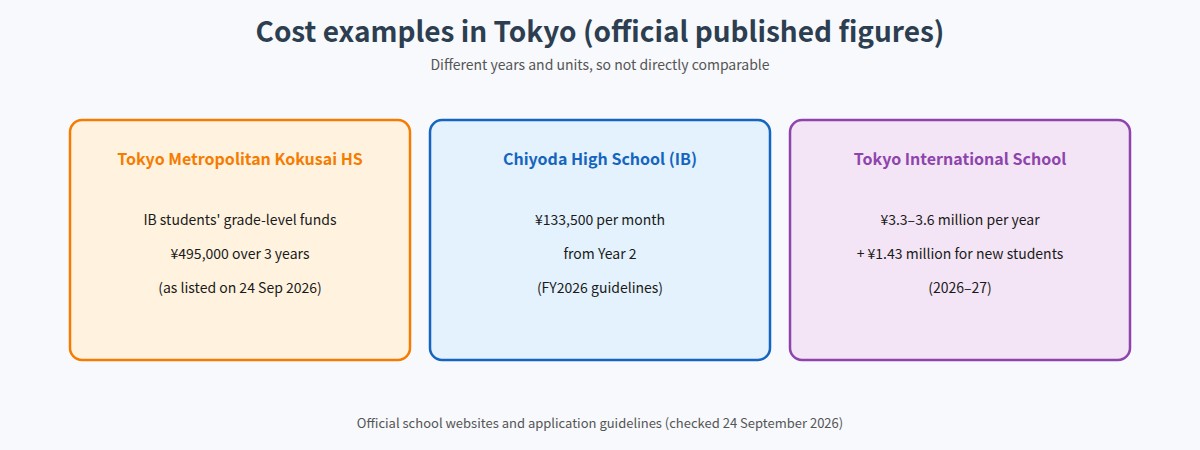
Tuition costs vary enormously across Tokyo’s IB schools. International schools typically charge between 2,000,000 and 2,700,000 JPY per year, while ichijoko private schools range from 1,000,000 to 1,700,000 JPY. Tokyo Metropolitan Kokusai High School stands out as an exceptionally affordable option at around 120,000 to 150,000 JPY per year, though admission is highly competitive. Remember to factor in additional costs such as enrollment fees (often 300,000 to 500,000 JPY), school bus fees, uniforms, textbooks, and extracurricular activities.

Location and Commute

Tokyo is a vast metropolitan area, and daily commute times matter enormously for students’ well-being and family logistics. Schools in central areas like Minato-ku and Chiyoda-ku are accessible from many directions, while schools in Machida-shi or Nerima-ku may require longer commutes from certain neighborhoods. Consider proximity to train stations, school bus routes, and your home or office location when evaluating schools.

University Placement Goals

If your child’s ultimate goal is admission to a specific type of university, whether overseas or in Japan, research each school’s university placement track record. Schools with established DP programs typically have strong university counseling and a history of successful placements. For Japanese universities specifically, ichijoko schools may offer advantages through IB-specific admissions pathways that many Japanese universities have established.

School Culture and Values

Every school has a distinct culture. Some are faith-based (Seisen, St. Mary’s), some emphasize bilingualism, some prioritize academic rigor, and some focus on holistic development. Visit schools, attend open houses, and speak with current families to get a genuine sense of whether a school’s culture aligns with your family’s values and your child’s personality.

Application Tips for Expat Families

Navigating the Tokyo IB school landscape as an expat family can be challenging, especially if you are new to Japan. Here are practical tips to improve your application experience and chances of admission.

Start Early

Many of Tokyo’s top IB schools have waitlists, particularly for popular entry points like kindergarten, Grade 1, and Grade 7. Begin researching and contacting schools at least 12 to 18 months before your desired start date. Some schools accept applications up to two years in advance for certain grade levels.

Attend School Events

Most Tokyo IB schools hold open houses, school tours, and information sessions throughout the year. Attending these events is strongly recommended, not only to learn about the school firsthand but also to demonstrate your family’s genuine interest. Some schools consider event attendance as part of their admissions evaluation.

Prepare Required Documents

International schools typically require academic transcripts, teacher recommendation letters, a completed application form, a copy of your child’s passport, and sometimes standardized test scores or a portfolio. Ichijoko schools may require additional documentation related to Japanese residency or visa status. Gather all documents well in advance, and have translations prepared if originals are not in English or Japanese.

Understand the Assessment Process

Admissions assessments vary by school. Some schools conduct entrance exams in English, math, and sometimes Japanese. Others use interviews, group activities, or trial classes to evaluate prospective students. For younger children, assessments may focus on developmental readiness and social skills rather than academic knowledge. Ask each school about their specific assessment process so you can prepare appropriately.

Consider Corporate Relocation Support

If you are relocating to Tokyo through an employer, check whether your company offers education assistance or relocation support that includes school placement services. Many large multinationals and diplomatic missions have established relationships with Tokyo’s international schools and can facilitate introductions or priority placement.

Plan for the Transition

Moving to a new school in a new country is a significant transition for any child. Look for schools that offer dedicated transition support, such as buddy programs, English as an Additional Language (EAL) classes, or counseling services. Ask about how the school supports new students in integrating into the community.

Frequently Asked Questions

What is the IB, and why does it matter?

The International Baccalaureate is a globally recognized educational framework developed in Geneva, Switzerland. It consists of four programs: the PYP (ages 3-12), MYP (ages 11-16), DP (ages 16-19), and the Career-related Programme (CP). The IB is valued by universities worldwide for its rigorous academic standards, emphasis on critical thinking, and holistic approach to education. A strong IB Diploma score can open doors to top universities across the globe.

Can Japanese nationals attend international IB schools in Tokyo?

Yes. Most international schools in Tokyo accept Japanese nationals, though some may give priority to students with foreign passports or require a certain level of English proficiency. Ichijoko schools are specifically designed for Japanese nationals and are recognized by the Japanese Ministry of Education, which means attending these schools fulfills compulsory education requirements.

How does the IB Diploma compare to Japanese university entrance exams?

An increasing number of Japanese universities now accept the IB Diploma as part of their admissions process, often through dedicated IB-specific entrance tracks. Top universities such as the University of Tokyo, Kyoto University, Waseda University, and Keio University all have IB admissions pathways. However, acceptance criteria and the weight given to IB scores vary by institution and faculty. Some students at ichijoko schools prepare for both the IB Diploma and traditional entrance exams as a dual strategy.

What is the average IB Diploma score at Tokyo schools?

Tokyo’s top IB schools typically achieve average DP scores in the range of 30 to 36 points out of a maximum of 45, which is at or above the global average of approximately 30 points. Individual school results vary from year to year. Schools like K. International School Tokyo and Aoba-Japan International School have historically posted strong results. Always ask schools directly for their most recent DP results during the admissions process.

Is it possible to switch from a non-IB school to an IB school mid-way?

Yes, many students enter IB schools at transition points such as Grade 7 (start of MYP) or Grade 10/11 (start of DP). Schools typically assess incoming students to ensure they are prepared for the IB program. Students who have been in inquiry-based or internationally oriented curricula tend to adapt more smoothly, but schools generally welcome motivated students from diverse educational backgrounds.

Do IB schools in Tokyo offer scholarships or financial aid?

Some private and international IB schools in Tokyo offer scholarships or financial assistance, though availability varies widely. Tokyo Metropolitan Kokusai High School, as a public institution, offers the most affordable IB option. Some private ichijoko schools offer merit-based or need-based scholarships. International schools occasionally offer sibling discounts or partial scholarships. It is always worth inquiring directly with schools about financial support options.

What support is available for students who are not fluent in English?

Most international IB schools in Tokyo offer English as an Additional Language (EAL) programs to support students who are not yet fluent in English. These programs provide intensive language support alongside the regular curriculum. However, schools typically require a minimum level of English for admission to higher grades. Ichijoko schools deliver instruction in both Japanese and English, making them more accessible for students whose primary language is Japanese.

Summary: Tokyo’s IB Landscape in 2026

Tokyo offers the most diverse and well-developed IB school ecosystem in Japan. Families can choose from full-continuum international schools like Aoba-Japan International School and K. International School Tokyo, specialized PYP programs at institutions like Seisen International School, innovative ichijoko schools like Tokyo Metropolitan Kokusai High School and Kaichi Nihonbashi Gakuen, and early-years programs at Aoba-Japan Bilingual Preschool’s five campuses and Machida Kobato Kindergarten.

The key to making the right choice lies in understanding your family’s priorities: language goals, budget, location, desired IB pathway, and long-term educational objectives. With careful research, school visits, and early application planning, you can find an IB school in Tokyo that provides your child with a world-class education and a strong foundation for future success.

Whether you are a newly arriving expat family, a long-term foreign resident, or a Japanese family exploring international education options, Tokyo’s IB schools offer pathways that can transform your child’s educational journey. The investment in IB education is an investment in critical thinking, global awareness, and the skills needed to thrive in an increasingly interconnected world.

コメント

タイトルとURLをコピーしました